Japanese Aesthetics: Finding Beauty in Imperfection, Silence and Time
A weathered wooden temple. An old ceramic bowl with an uneven glaze. The silence between two sounds. Cherry blossoms beginning to fall only days after reaching full bloom.
Some of the most memorable forms of beauty in Japan are not about perfection. They emerge through time, change, restraint and, sometimes, absence.
Japanese aesthetics refers not to a single philosophy, but to a collection of ideas about beauty that developed through Japanese literature, Buddhism, tea culture, architecture, painting, gardens and everyday life. Among the best known are wabi, sabi, mono no aware, yūgen and ma.
These ideas are not interchangeable, and none can explain the whole of Japanese culture. Each offers a different way of paying attention: to simplicity and age, to the passing nature of things, to what remains partly hidden, or to the expressive power of space and pause.
Understanding them can change the way a traveller experiences Japan. A temple becomes more than an old building. A tea bowl becomes more than a beautiful object. Even an apparently empty garden can begin to feel remarkably expressive.
There Is No Single “Japanese Aesthetic”
Outside Japan, the phrase most readily associated with Japanese aesthetics is probably wabi-sabi. It is useful, but it is only part of a much wider story.
Long before aesthetics became an academic discipline in modern Japan, literature and the arts had developed a rich vocabulary for different experiences of beauty. Some terms describe the appeal of simplicity or age. Others concern the emotional force of transience, the depth of what cannot be completely seen, or the relationship created by an interval.
Nor have these ideas remained fixed. Their meanings have shifted across periods, art forms and social settings. The qualities admired in a medieval poem, a sixteenth-century tea gathering and a contemporary interior may overlap, but they do not belong to one timeless formula for Japanese beauty.
Rather than looking for a single rule, it is more revealing to approach these concepts as distinct lenses. Together, they sharpen our awareness of material, season, atmosphere and time.
Wabi and Sabi: Beauty That Does Not Need Perfection
Wabi and sabi are historically different concepts. In broad terms, wabi came to suggest an austere, unadorned way of living and an appreciation of modest simplicity, while sabi became associated with the beauty of age, weathering and the quiet patina of time.
Their older meanings were not always positive. Both words could carry associations of loneliness, poverty or decline. Over time, especially in literary and tea contexts, those qualities were reinterpreted. What seemed lacking could also possess depth; what had grown old could acquire character.
This helps explain why a handmade tea bowl need not be perfectly symmetrical, why old wood does not necessarily need to look new, and why a surface marked by years of use may gain rather than lose presence. The point is not to celebrate damage for its own sake. It is to recognise that beauty need not depend on flawless finish or permanent newness.
These sensibilities became deeply influential in wabi-cha, a restrained approach to tea that developed through several generations of practitioners. In the sixteenth century, Sen no Rikyū became one of its most important figures, refining forms of tea practice that valued modest rooms, carefully chosen utensils and close attention to the occasion. He did not invent this tradition alone, but his influence on its later ideals was profound.
In such a setting, richness does not disappear; it changes form. Natural materials, subdued decoration and an object selected for the season can matter more than luxury or display. The absence of excess becomes part of the experience.
Mono no Aware: Beauty in Things That Pass
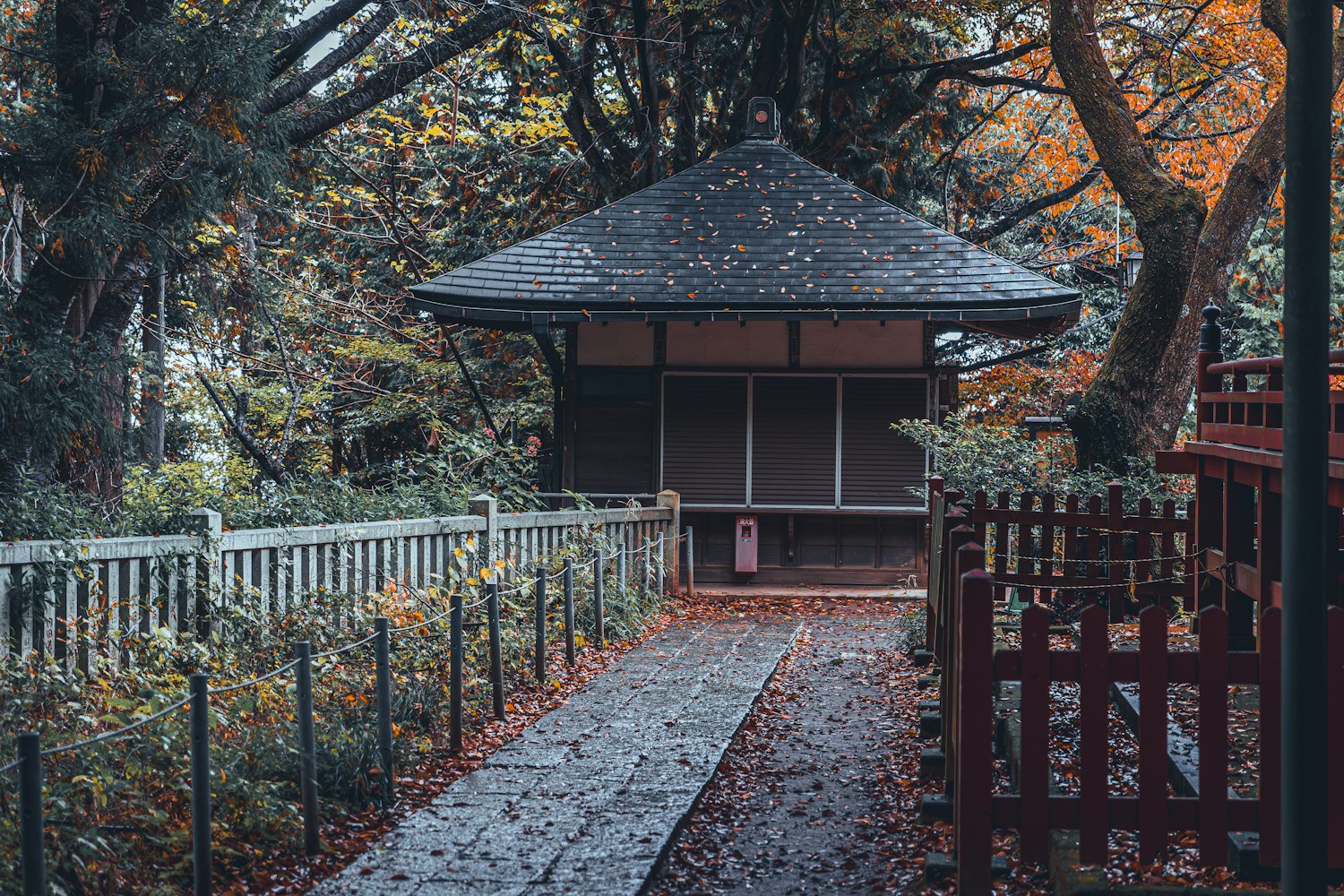
Mono no aware is a sensitivity to the emotional character of things, especially the poignancy that arises from knowing they will change or pass away. It is not simply sadness. It can hold tenderness, gratitude, pleasure and regret at the same time.
The idea is often discussed beside the Buddhist teaching of impermanence, or mujō, but the two should not be treated as identical. Mujō names a fundamental condition of existence: all things change. Mono no aware describes an aesthetic and emotional responsiveness to that condition as it is encountered in the world and in human life.
Cherry blossoms offer the familiar example. Their beauty is inseparable from their brevity. They bloom spectacularly, remain for only a short time and fall. If they lasted all year, the experience would be different.
The same sensitivity runs through classical literature, where a season, a relationship or a moment at court can feel more vivid because it cannot be held. The awareness of an ending does not cancel delight. It intensifies attention.
Travel often works in a similar way. The sound of rain in a temple garden, evening light entering a wooden room, or a festival encountered by chance exists only once in precisely that form. Its temporary nature can make it more memorable.
Yūgen: The Beauty of What Is Not Fully Revealed
Yūgen suggests subtle or mysterious depth: a beauty whose full meaning is sensed rather than completely shown or explained. It draws its power from implication, atmosphere and the feeling that something extends beyond the visible surface.
The term became important in medieval discussions of poetry, where suggestion could open a poem onto emotions or landscapes larger than its few words. It also became central to the aesthetics of Noh. In Noh theatre, restrained movement, masks, music and spare staging can evoke worlds that are never represented literally.
A related effect appears in ink painting. Mist may obscure a mountain; a river may disappear beyond the edge of the paper; large areas may remain untouched. What is absent does not make the work incomplete. It invites the viewer to imagine what continues beyond the image.
Yūgen does not mean that everything should be vague. Its depth depends on precision: the right image, gesture or silence can reveal enough to awaken what cannot be stated directly.
Ma: The Importance of Space and Interval
Ma refers to a meaningful space, pause or interval created between things. It is not merely emptiness, and it is not a single ancient philosophy governing every Japanese art. Its meaning depends on context: architecture, music, theatre, conversation and design each make use of intervals in different ways.
In a room, ma may be felt in the distance between a flower arrangement and the edge of an alcove. In music, it may be the pause that gives shape to a sound. In movement, it can be the charged stillness before the next gesture.
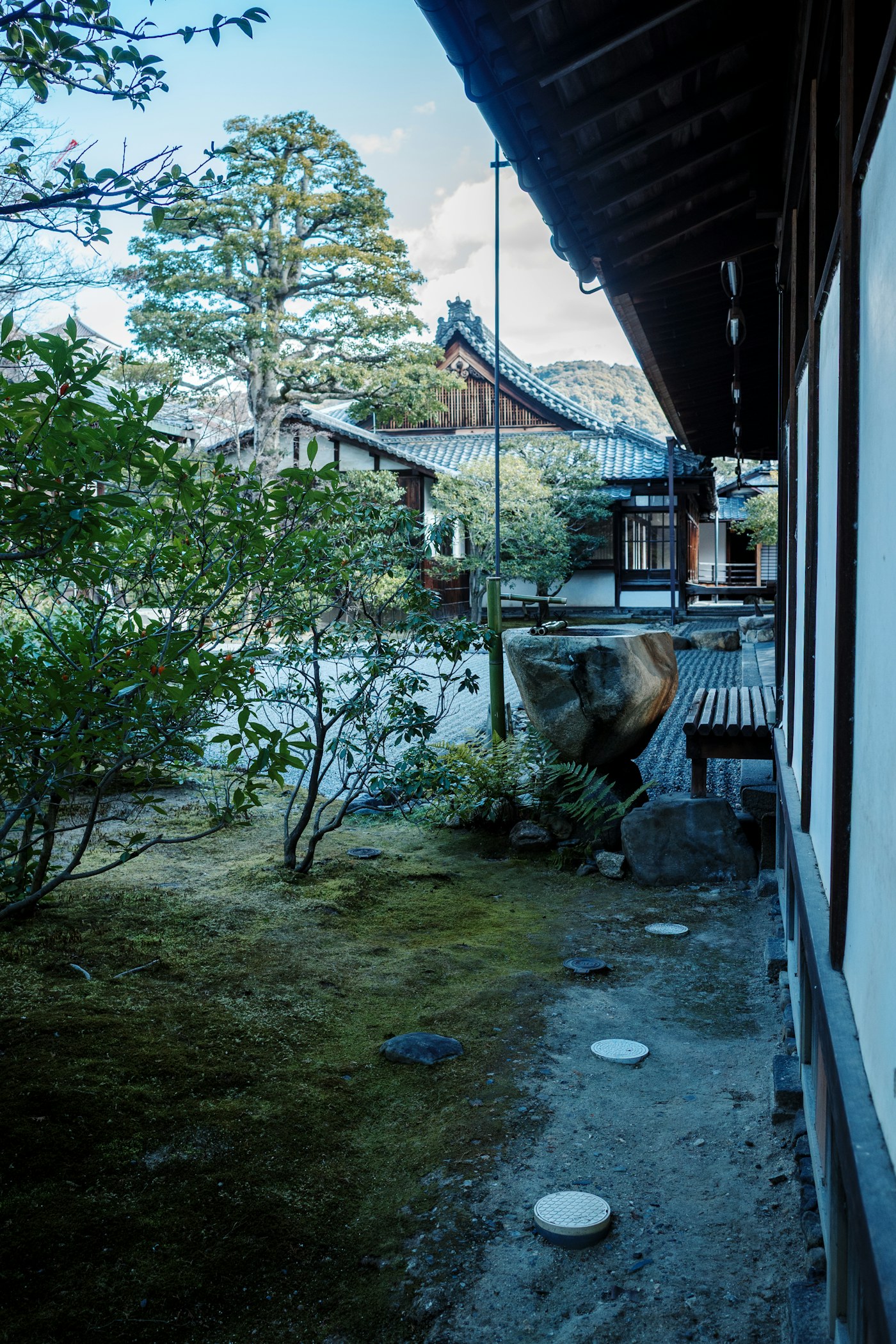
This is why an open area is not necessarily unused. It gives the elements around it room to exist and changes the relationship between them. A garden’s gravel, a painting’s untouched paper or a quiet interior can direct attention precisely because every surface has not been filled.
Instead of always asking what should be added, an awareness of ma invites another question: what becomes possible when something is left open?
Tea as an Aesthetic Experience
The Japanese tea ceremony, or chanoyu, brings many of these sensibilities into a single, carefully prepared encounter. It is not simply the act of drinking matcha. The room, garden approach, utensils, flowers, gestures, food and season all shape the gathering.
A rough ceramic bowl may be admired for the character of its clay and glaze. A single seasonal flower can carry more weight than an elaborate arrangement. A small room can make the distance between host, guest and object feel unusually intimate.
There is also an acute awareness that the occasion cannot be repeated exactly. Even if the same people meet again, the weather, utensils, conversation and mood will have changed. Attention to the moment is therefore not an abstract principle but part of the form itself.
Tea does not collapse wabi, sabi, mono no aware, yūgen and ma into one idea. It offers a setting in which simplicity, age, suggestion, interval and transience can be experienced together.
Where to Experience Japanese Aesthetics in Japan
These concepts become clearer when encountered in places and practices rather than treated only as beautiful words. There is no need to arrive with a fixed checklist. Start by slowing down and noticing how materials, light, season and space affect one another.
Kyoto
Kyoto is an accessible place to begin because temples, gardens, tea traditions and historic architecture make many layers of Japanese aesthetics visible within a relatively compact area.
At Ginkaku-ji, the relationship between architecture, garden and surrounding landscape offers a study in restraint. Kinkaku-ji, by contrast, is deliberately brilliant. Neither represents a complete or uniquely authentic Japanese aesthetic; the difference between them is itself instructive.
A Tea Room
Taking part in a thoughtfully explained tea gathering can make wabi and the aesthetics of attention easier to understand. Notice not only the tea but also the bowl, the flowers, the garden path, the materials of the room and the timing of the host’s gestures.
Tea experiences vary widely, from formal schools to introductory programmes. The most rewarding setting is often one that gives the objects and actions context rather than presenting the ceremony as a performance of timeless “Japanese tradition.”
Traditional Architecture
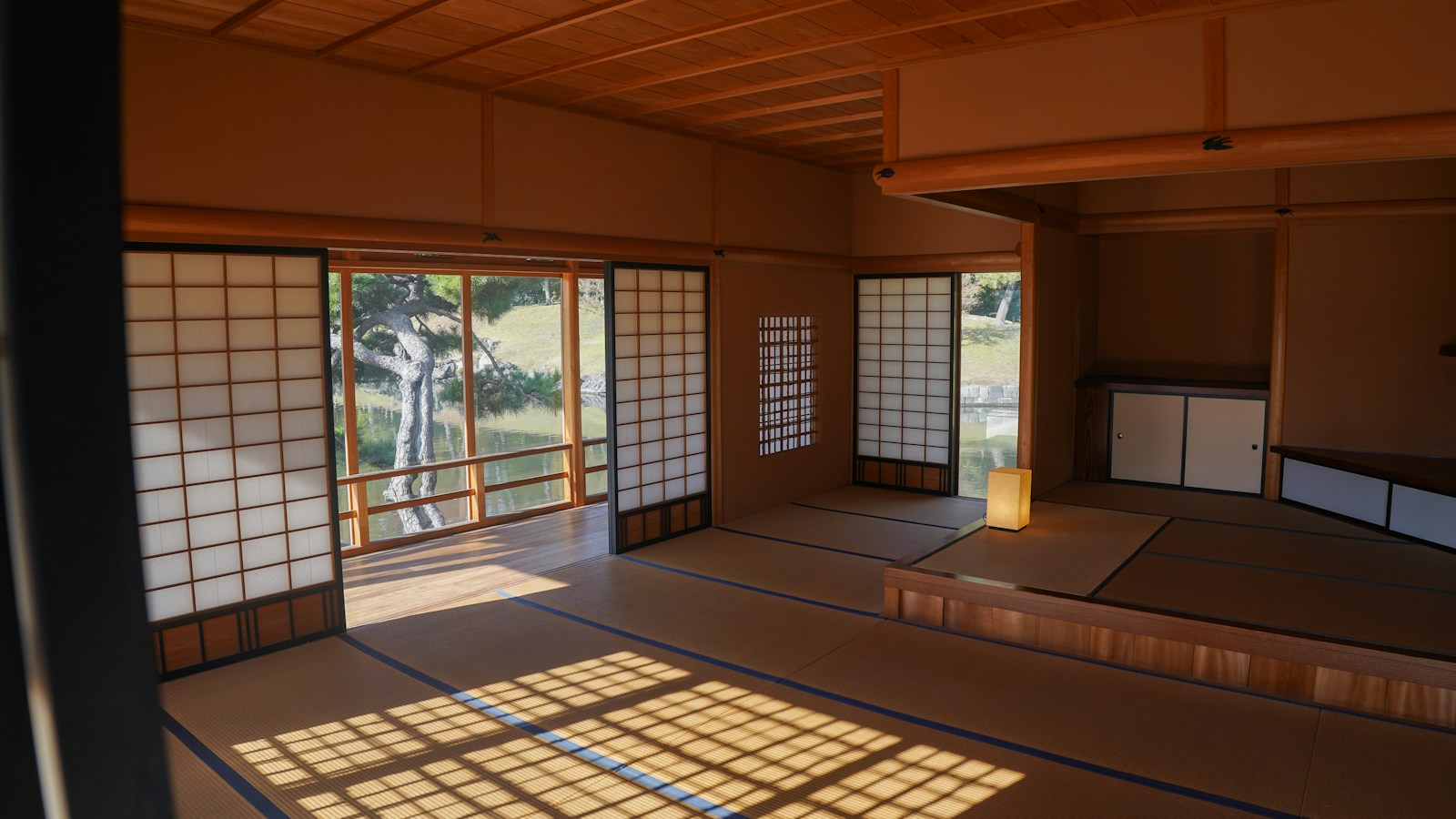
In a traditional wooden building, notice the shadows, the softened light passing through shōji, and the transitions between interior and garden. Verandas, thresholds and sliding screens can make the boundary between inside and outside feel adjustable rather than absolute.
Also look at what time has done to the materials. Grain, wear and repair are part of a building’s present character, even when careful conservation is required to preserve it.
Japanese Gardens
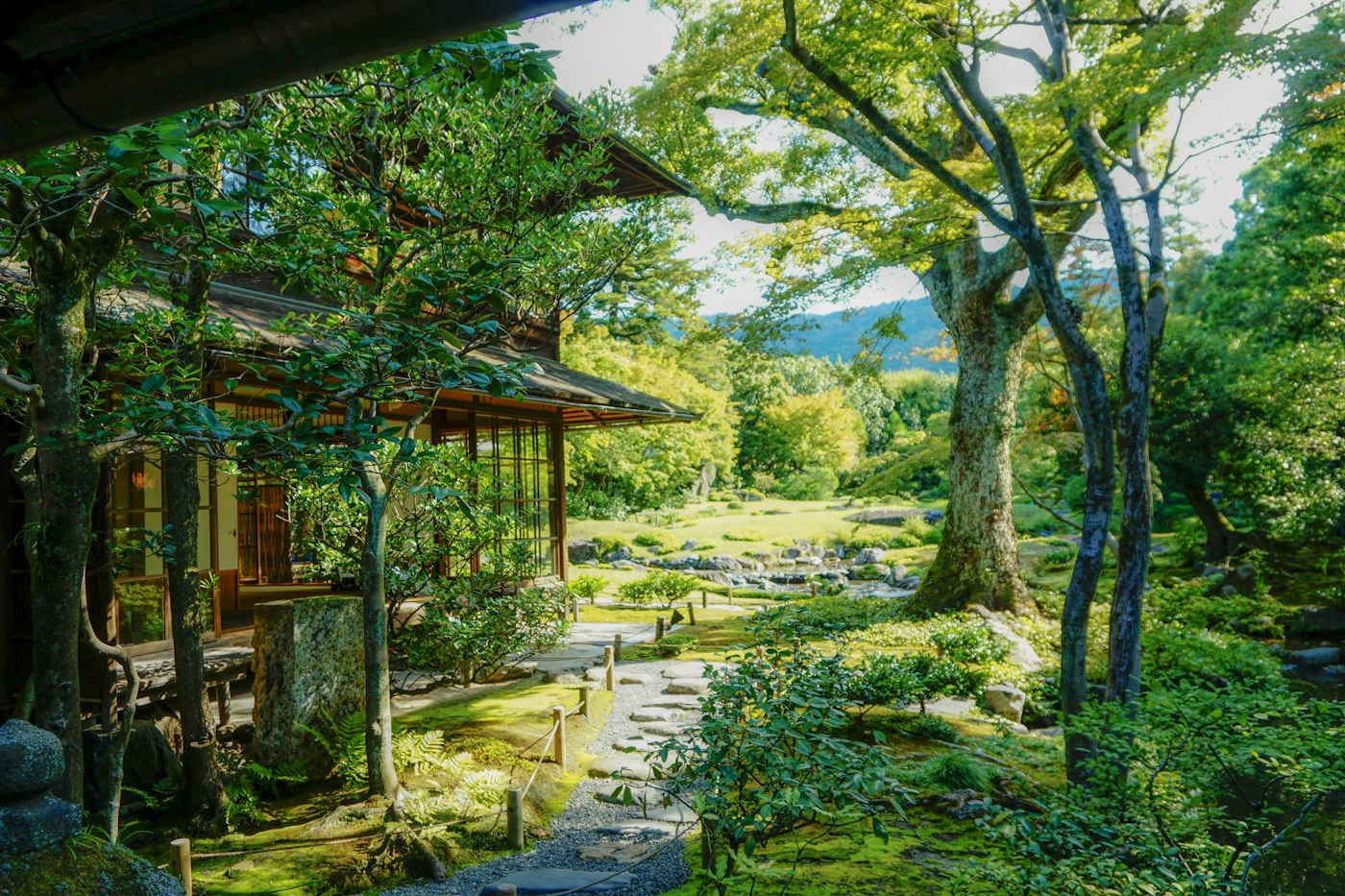
Japanese gardens are diverse, from dry landscapes to strolling gardens and compact courtyard spaces. Rather than searching only for flowers, pay attention to stones, moss, gravel, water, borrowed scenery and the intervals between them.
A garden may frame a distant hill, conceal part of a path or use an open field of gravel to hold the eye. It does not always try to overwhelm the visitor with information. Sometimes its quietest area is the part worth watching longest.
How to Notice Japanese Aesthetics on Your Visit
You do not need to identify every aesthetic concept as you travel. Instead, try these small observations:
- Look at materials: Notice the grain of wood, the texture of a tea bowl and the marks left by time.
- Notice the season: What will look, sound or feel different here in a month?
- Pay attention to pauses: Listen to the silence between sounds and observe the space between objects.
- Look beyond the obvious: Consider what a garden path conceals or what a painting leaves to your imagination.
- Compare rather than generalise: Visit places with different styles and ask what each is trying to express.
Explore these ideas in greater depth in our guide to wabi-sabi and our introduction to the Japanese tea ceremony.
For further reading, see the Stanford Encyclopedia of Philosophy’s overview of Japanese aesthetics. For travel context, explore the Japan National Tourism Organization’s guide to Ginkaku-ji.
A Different Way of Seeing Japan
Japanese aesthetics is sometimes presented as a collection of elegant terms: wabi sabi, mono no aware, yūgen, ma. They become more useful when we stop treating them as exotic definitions and begin using them as prompts for attention.
Notice the old surface that has not been replaced. Notice what an architect chose not to fill. Notice a seasonal detail that will disappear next week. Notice the pause before a sound.
How to Read an Artwork Without Reducing It to a Concept
It is tempting to enter a museum, identify a tea bowl as an example of wabi-sabi, and feel that its meaning has been settled. Yet an object is always more specific than the label attached to it. Who made it? For whom? What materials and techniques were available? Was it admired when new, or did later generations discover different qualities in it? These questions keep aesthetic vocabulary connected to history rather than turning it into decorative keywords.
Consider a ceramic vessel with an uneven surface. Its irregularity may come from the clay, firing process, intended function or choices made by the potter. It would be a mistake to assume every asymmetry was deliberately created to express a philosophy. Looking closely at the object first allows interpretation to emerge from evidence. The same care matters when discussing a garden’s open space or the weathered surface of a temple: conservation, use and change all contribute to what visitors see today.
Three Ways to Experience These Ideas More Deeply
At a museum: Choose one object and read its date, materials and provenance before deciding what it makes you feel. Compare it with another work from a different period. The contrast may be more revealing than a general statement about Japanese taste.
In a garden: Find a place to sit and notice how the view is framed. Look for relationships between architecture and landscape, and for changes caused by light or weather. The garden may have been designed for a particular viewpoint or pattern of movement.
During tea: Pay attention to how the host selects and handles utensils, not only to the finished bowl of matcha. Ask about the season and occasion. The meaning of a gesture often depends on the gathering rather than on a fixed symbolic translation.
These habits are useful precisely because they resist easy generalisations. Japanese aesthetics becomes most interesting when it helps us ask better questions about real places and objects.
Japan’s beauty is not always in the spectacular.
Sometimes it is found in something imperfect, temporary or left open: something that asks you to look a little longer. And once you begin to notice those qualities, the way you travel through Japan may change.